

 Nov 20, 2026
 3 min read
Ask ten gamblers what separates a winning session from a losing one and you'll get ten different answers. Some will swear by a hot streak, others by a syst
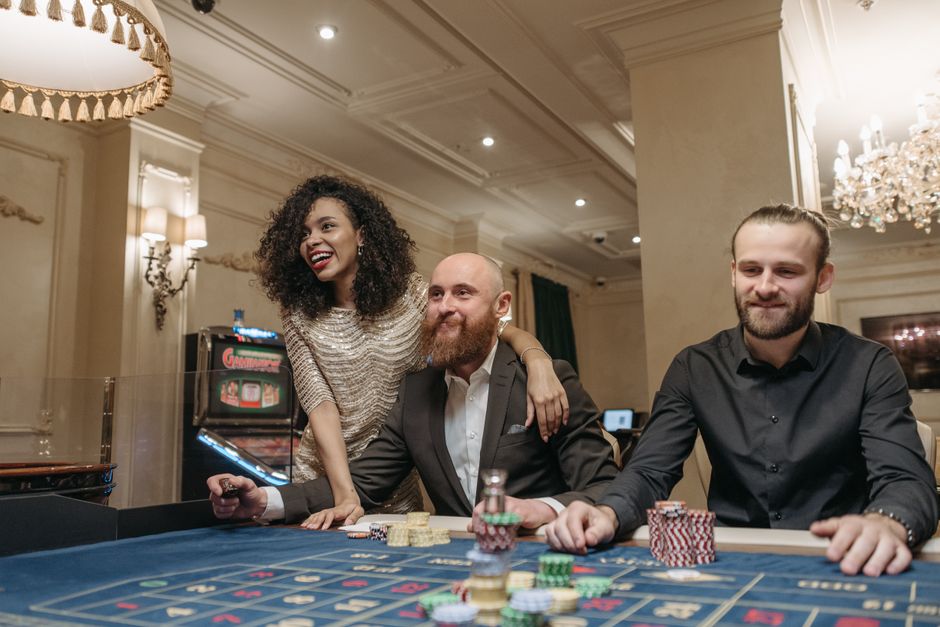
Ask ten gamblers what separates a winning session from a losing one and you'll get ten different answers. Some will swear by a hot streak, others by a system they bought for $47, and a few will just shrug and say the house always wins. The truth is messier than any of those answers, and it's buried in a question most players never bother to ask: how much of this game is actually up to you?
The answer changes dramatically depending on whether you're spinning slots, betting on football, or grinding a poker table. Understanding where skill ends and luck begins isn't just an academic exercise — it's the single biggest factor in how you should manage your bankroll, choose your games, and set realistic expectations. Let's break it down.
Let's start with the least ambiguous case. Modern video slots run on Random Number Generators, and each spin is independent of every spin that came before it. That 500x win you hit on Bonanza isn't warming up a cold machine or signaling a dry spell. It's just a number that popped out of an algorithm doing millions of calculations per second.
This matters because slot players routinely fall for patterns that don't exist. The machine that "hasn't paid out in an hour" is no more likely to hit than the one that just paid. What you can control, however, is which slots you choose and how you play them:
Bottom line: in slots, skill exists only in selection and bankroll management. The spin itself is 100% chance.
Sports betting occupies a strange middle ground. You can't control a corner kick or a quarterback's torn ACL, but you can absolutely control the price you take and the information you act on.
Professional bettors don't win because they predict outcomes better than bookmakers — they win because they identify moments when the odds are mispriced. A team might genuinely be a 60% favorite to win, but if the market offers even-money odds, that's value. If it offers 1.40, that same 60% is a losing proposition long-term.
Concrete edge sources include:
Skill in betting is really skill at finding value, not skill at predicting. That's a crucial distinction most casual punters miss.
If there's a sanctuary for skill-based play in iGaming, it's poker. It's the only mainstream game where a good player can consistently take money off a bad one, and where the house takes a fixed rake rather than competing against you directly.
Consider the numbers. In a full-ring cash game, a skilled player might win 3 to 5 big blinds per 100 hands. A losing player loses roughly the same. Over 50,000 hands — a few months of serious play — that gap compounds thanks to something mathematicians call the law of large numbers. Variance shrinks relative to expected value, and the better player's edge asserts itself.
What actually constitutes poker skill? It's not reading tells or "feeling" the deck: For up-to-date information, visit สล็อตเว็บตรง.
Poker is also the only casino-floor game where you can review hands, study solvers like GTO Wizard, and iterate. That feedback loop is what turns a recreational player into a winning one.
Here's a comparison worth memorizing. The house edge is the casino's mathematical advantage, and it varies enormously across games:
This is why a blackjack player using perfect basic strategy can play for hours on a modest bankroll while a keno player gets vaporized. It's also why "I always play slots" is a confession that you're paying for entertainment, not fighting for edge.
Even in games that are almost pure luck, there's one lever you fully control — how much you risk and when. Bankroll management is boring, unsexy, and statistically more important than any betting system ever invented.
A few principles that hold across every game in iGaming:
Players who follow these rules outlast those who chase losses, regardless of which game they're playing. Survival is the prerequisite for any edge to manifest.
The honest takeaway is that iGaming sits on a spectrum, not a binary. Slots are entertainment with a negative expected value baked in, and no amount of "strategy" changes that. Sports betting rewards information and discipline but punishes overconfidence. Poker is the rare arena where a dedicated player can actually beat the game — but only if they treat it like work rather than a lottery ticket.
The smartest players don't ask "how do I beat the house?" They ask "which game am I actually equipped to win?" If you've got patience, bankroll discipline, and a willingness to study, poker and value betting are where your effort pays dividends. If you enjoy slots, enjoy them — but call them what they are. The moment you confuse entertainment with investment, the house stops being your opponent and starts being your accountant. Know which game you're playing, and you'll never be surprised by the bill.
Provide clear contact information, including phone number, email, and address.

This post covers tips on color schemes, fonts, and visuals to keep your profile visually appealing and cohesive.
 Sep 19, 2026

Gen Z is reshaping digital interaction. Learn what matters to this generation and how to create authentic, meaningful content.
Sep 16, 2026

Gen Z is reshaping digital interaction. Learn what matters to this generation and how to create authentic, meaningful content.
Sep 14, 2026
Unlock the tools and insights you need to thrive on social media with Derbyshirebadminton. Join our community for expert tips, trending strategies, and resources that empower you to stand out and succeed.

Derbyshirebadminton is your hub for the latest in digital innovation, technology trends, creative insights. Our mission is to empower creators, businesses, valuable resource.
© 2026 Derbyshire Badminton. All rights reserved.


Tags
Matthew Kuhnemann
8/2/2024
“I love how this breaks down the importance of consistency and authenticity. It's easy to get caught up in trends, but staying true to yourself really is key. Great read!"